Xiamen Tmax Battery Equipments Limited was set up as a manufacturer in 1995, dealing with Laboratory equipments, technology, etc. We have total manufacturing facilities of around 2, 000 square meters and more than 100 staff. Owning a group of experie-nced engineers and staffs, we can bring you not only reliable products and technology, but also excellent services and real value you will expect and enjoy.
Microwave Mesh Belt Furnace: High-Efficiency Continuous Thermal Processing Technology
Amicrowave mesh belt furnaceis an advanced continuous thermal processing system widely used for drying, sintering, calcination, sterilization, and heat treatment of industrial materials. By combining microwave heating with a conveyor mesh belt structure, this equipment provides rapid, uniform, and energy-efficient processing, making it an essential solution for modern manufacturing industries such as ceramics, metallurgy, chemical engineering, food processing, and new energy materials.
1. Working Principle of Microwave Mesh Belt Furnace
A microwave mesh belt furnace operates on the principle of microwave dielectric heating. When microwaves penetrate materials, polar molecules and ions oscillate rapidly, generating heat from the inside out. This volumetric heating is significantly different from conventional conduction and convection methods, where heat is transferred from the outside inward.
The mesh belt structure enables continuous feeding and discharging of materials. As products travel through the furnace on a stainless-steel or PTFE-coated mesh belt, they pass through multiple microwave heating zones. In each zone, controlled microwave energy, temperature, and airflow ensure precise and consistent thermal treatment.
Key Functional Elements:
*Microwave generators (magnetron or solid-state modules)
*Multiple heating chambers with reflective waveguides
*Food-grade or industrial-grade mesh belt
*Temperature, humidity, and power monitoring systems
*Cooling sections and automated discharge mechanisms
This integration of microwave technology with conveyor-based automation enables continuous, stable, and scalable production capable of meeting modern industrial demands.
2. Engineering Features and Advantages
Continuous Production Capability
The most notable advantage of a microwave mesh belt furnace is its ability to support uninterrupted production. Materials can be loaded, processed, and discharged continuously, drastically reducing labor and processing time.
Rapid and Uniform Heating
Microwave energy penetrates deeply into materials, heating them evenly and rapidly. This minimizes thermal gradients, prevents deformation, and ensures consistent product quality.
Reduced Energy Consumption
Microwave heating is highly efficient because energy is absorbed directly by the product. In many cases, energy consumption can be reduced by 30–60% compared to conventional hot-air or resistance furnaces.
Precise Process Control
Advanced PLC or touch-screen systems allow:
* Real-time adjustment of microwave power
* Monitoring of belt speed and chamber temperature
* Data logging for quality assurance
This ensures stable and repeatable processing for industrial-level production.
Improved Material Properties
Microwave-enhanced processes often improve material microstructures. For example:
* Ceramics achieve higher density at lower temperatures
* Powder metallurgy products show improved bonding
* Chemical materials undergo more uniform reactions
Environmentally Friendly Design
With reduced heat loss, minimal carbon emissions, and cleaner operation, the microwave mesh belt furnace aligns with green manufacturing standards.
3. Industrial Applications of Microwave Mesh Belt Furnaces
Due to its continuous processing capability and uniform heating performance, this equipment is widely used across various industries.
Ceramics and Metallurgy
Used for:
* Drying ceramic tiles, catalysts, and substrates
* Sintering metal powders and magnetic materials
* Debinding and pre-sintering of injection-molded components
Microwave heating significantly shortens production cycles and improves product strength and structure.
Chemical and Pharmaceutical Processing
The furnace can process:
* Absorbents, catalysts, and activated carbon
* Pharmaceutical granules and organic compounds
* Chemical powders requiring uniform moisture removal
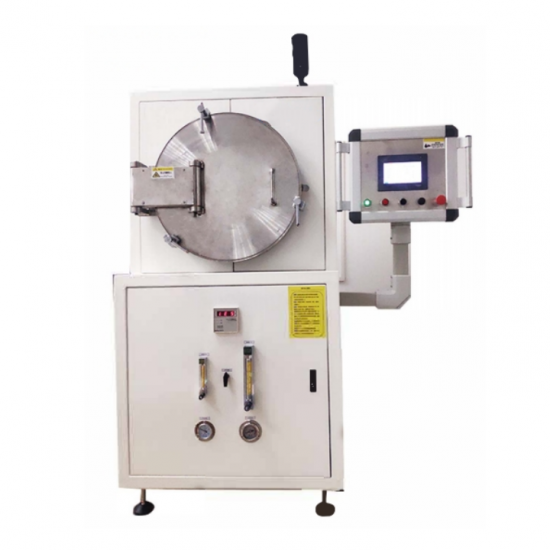
Microwave Furnace
The gentle, uniform heating ensures product integrity and compliance with strict quality regulations.
Food Industry
Food-grade microwave mesh belt furnaces are used for:
* Drying fruits, vegetables, herbs, and spices
* Pasteurization and sterilization
* Dehydration of meat and seafood products
Microwave heating preserves nutrients, color, and flavor while ensuring high food safety standards.
New Energy Materials
In the battery and energy storage field, the equipment is applied in:
* Drying electrode materials
* Heating carbon foams and composite materials
* Sintering ceramic electrolytes
The uniform heating is essential for developing high-consistency, high-performance energy materials.
Environmental and Waste Treatment
Microwave mesh belt systems can be used for:
* Drying sludge and waste solids
* Sterilizing medical waste
* Carbonizing biomass
These applications support sustainable waste management strategies.
4. Technical Configurations and Customization Options
Manufacturers often customize microwave mesh belt furnaces based on production needs. Adjustable configurations include:
Mesh Belt Material and Width
Options include stainless steel, PTFE, or food-grade materials, depending on product characteristics and temperature requirements.
Microwave Power and Frequency
Systems can be designed with 915 MHz or 2450 MHz microwave frequencies, or hybrid configurations for specialized materials.
Heating Zone Layout
Furnaces can include 2 to 20+ microwave heating zones, depending on throughput requirements.
Airflow and Temperature Control
Supplementary hot-air systems and moisture exhaust ports ensure optimized drying and heating rates.
Automation and Integration
The furnace can be integrated into a full production line with:
* Feeding systems
* Cooling conveyors
* Packaging equipment
This enables fully automated, high-efficiency production.
5. Conclusion
Themicrowave mesh belt furnace** represents a significant advancement in continuous thermal processing technology. With its superior heating efficiency, uniformity, energy savings, and scalability, it has become a critical piece of equipment for industries requiring precise and reliable thermal treatment. Whether used for ceramics, chemical powders, foods, or new-energy materials, this furnace enhances productivity and ensures consistent high-quality results. For modern factories seeking environmentally friendly and cost-effective solutions, adopting a microwave mesh belt furnace is a strategic and future-oriented investment.